Fencing Gift Ideas - What to Buy a Fencer
So someone you love fences, and you have no idea what any of it means. You have heard the words foil, epee, and saber and you are not sure which one they do. Good news: you do not need to know to buy them something they will genuinely use.
This guide is organized by budget, and it starts with the most important part — the things you should not buy as a surprise.
Quick facts
- Never buy a weapon, mask, jacket, glove, or shoes as a surprise. All of them are sized, most are weapon-specific, and many clubs mandate a particular supplier.
- Consumables are the safest gift. Tip screws, springs, point tape, and socks get used up and always get used.
- Every fencer needs spare body cords. Most tournaments require you to bring at least two working sets, so a spare is never wasted.
- Experiences beat objects. A private lesson or a camp deposit is consistently the most valued gift, and it has no size.
- If in doubt, ask. Fencers keep mental wish lists and will happily tell you.
What should you never buy a fencer as a surprise?
Start here, because this is where well-meaning gifts go wrong.
Do not buy a weapon. Foil, epee, and saber are three different weapons, and a fencer who does one will have no use for another. Blades also come in sizes (a size 5 blade is standard for adults, size 2 or 3 for younger fencers) and in electric and non-electric versions that are not interchangeable.
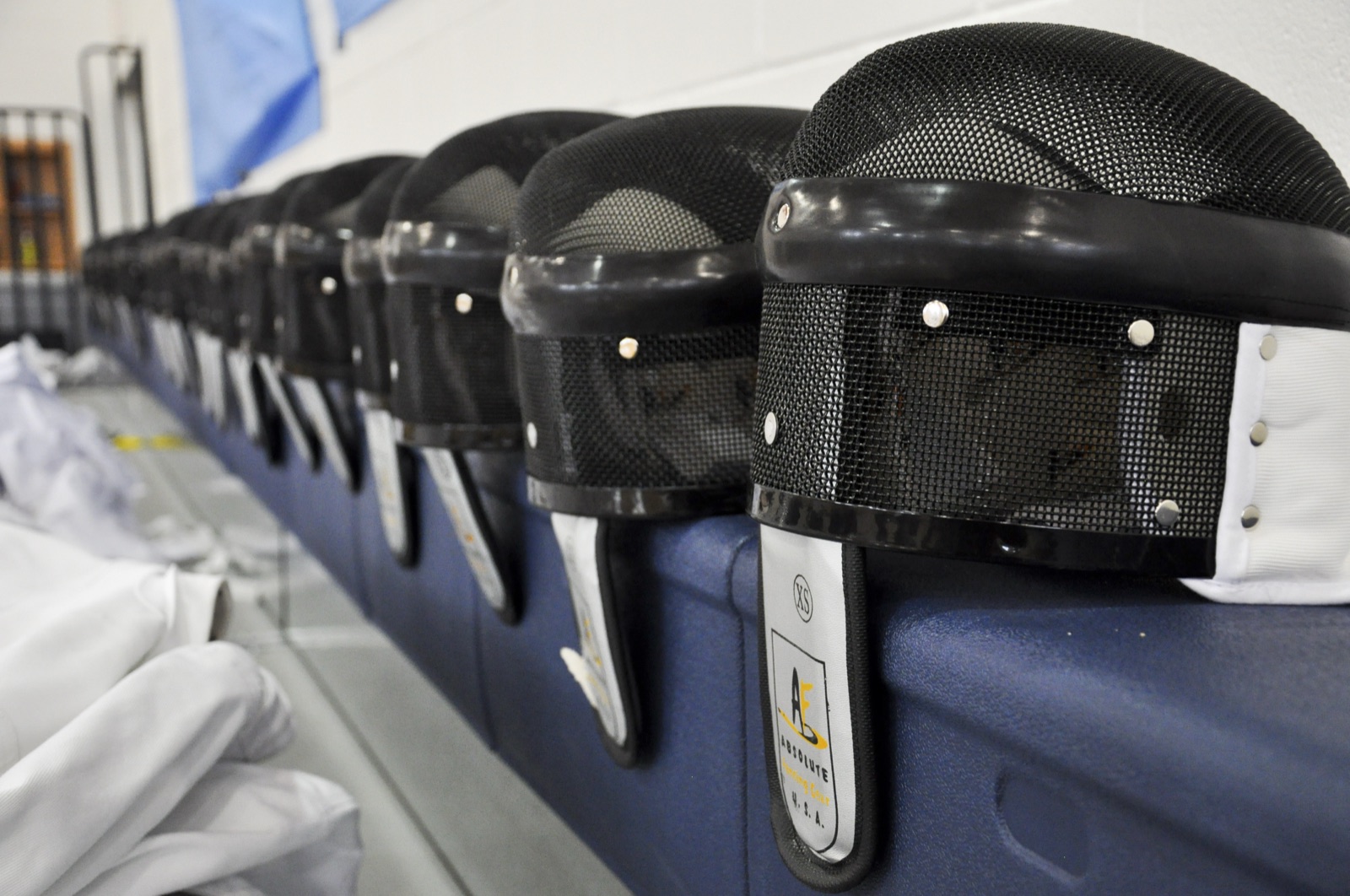
Do not buy a mask, jacket, plastron, or knickers. These are fitted safety equipment. A mask that does not fit is not merely uncomfortable, it is unsafe, and a jacket in the wrong size will fail an equipment check. Sizing also differs between manufacturers. Our beginner equipment buyers guide explains what a full kit involves, and our guide to fencing masks covers why fit matters so much.
Do not buy gloves or shoes. Both are sized, and fencers are particular about both. Gloves in particular run differently by brand.
Check with their club before buying anything mandatory. Many clubs require specific uniform suppliers or colors for their team.
If you want to give gear anyway, the graceful move is a gift certificate from a fencing retailer — Leon Paul, Absolute Fencing Gear, Blue Gauntlet, Physical Chess, and Radical Fencing all sell them, and the fencer picks their own size.
Best gifts under $25
This is the sweet spot for stocking stuffers, and it is where consumables live.
Point supplies. Every electric fencer burns through these. If they fence foil, buy tip screws, springs, and point tape. If they fence epee, buy tip screws and spring sets. These cost a few dollars, never expire, and are always needed. You cannot buy the wrong one as long as you know the weapon — and that is the one thing worth asking.
Long socks. Fencing uniforms require socks that cover the knee, and fencers go through them. Cushioned, moisture-wicking compression soccer socks in a fencer’s size are a small luxury they rarely buy themselves. Buy from a sports retailer where sizing is clear.
Glove wipes, grip tape, or a mask deodorizer. Fencing kit gets unpleasant. Anything that helps is welcome — see our guides on cleaning a mask and cleaning a uniform.
Fencing-themed small goods. Etsy has a deep catalogue of fencing pins, stickers, keychains, and enamel art from independent makers.
Best gifts under $50
A spare body cord. Body cords wear out, and most tournaments require you to present at least two working sets at check-in. A fencer will always take another. You need to know their weapon — saber and foil cords differ from epee cords — and their plug type. Our guide to body cord plugs and sockets explains the difference.
Books. Fencing has a small but excellent literature, and most of it sits in this price range.
- Epee 2.6 — Johan Harmenberg won the 1980 Olympic gold and the 1977 World Championship with a deliberately unorthodox system, and this book explains it. Nominally about epee, but the strategic ideas apply to all three weapons. This is the updated edition of the book long sold as Epee 2.0.
- Fencing Is My Life — the autobiography of Sergei Golubitsky, a three-time World Champion in foil. More storytelling than technique, and a good read for anyone in the sport.
- Modern Saber Fencing — Zbigniew Borysiuk’s overview of how saber changed, and the first English-language book devoted to the weapon in over 75 years.
- Winning Ugly — Brad Gilbert’s book is about tennis, not fencing, but it is the sports-psychology book fencers recommend to each other most often.
- By The Sword — Richard Cohen’s history of swordsmanship, from gladiators to Olympic fencing. The gift for someone who loves the sport’s romance as much as its rules.
The Princess Bride. The film that brought a remarkable number of people into fencing. If they do not own a copy, they will be delighted.
Recovery tools. The Stick is a segmented roller for working out muscle tightness after training. It has been a staple in fencing bags since long before recovery gear was fashionable, and it comes in several lengths. A foam roller or a tub of Tiger Balm serves the same purpose for less.
Electrolyte powder. Fencing tournaments run eight to twelve hours in a hot venue under a jacket, and dehydration is the most common reason fencers fade in the afternoon — see Water: A Wonderful Performance Enhancer. Buy an unflavored or plain-flavored variety; flavor is intensely personal.
Best gifts under $100
A private lesson, or several. This is the gift most fencers name when asked. Individual coaching is the fastest way to improve, and many fencers ration lessons for cost reasons. Contact their club directly — most will sell a lesson block as a gift. Our guide on why fencing lessons are so short explains what actually happens in one.
A percussive massage device. The TheraGun Mini is small enough to live in a fencing bag and gets into the quad and calf tightness that fencing footwork produces. Cheaper alternatives are plentiful and mostly fine.
Personalized kit. Most major retailers will embroider a name or club logo on a fencing bag. Lead times run long, so order well before the holiday.
Nike and adidas training apparel. Neither company makes fencing-specific clothing any more, but fencers train in ordinary athletic wear. The APS fencing store carries fencing-branded shirts and shorts in this range.
Best gifts over $100
A camp or a tournament trip. Summer fencing camps, a coach’s training intensive, or simply covering the entry and travel for a tournament they were going to skip. For a competitive fencer this is worth more than any object.
A quality fencing bag. This is the one large piece of equipment that is not sized and not weapon-specific, so it is safe to buy. A roller bag that fits a full kit is a genuine upgrade over the starter bag most fencers own. Check what they have first.
A custom-painted mask. Several artists paint fencing masks, and the results are spectacular. One serious caveat: painted masks must still pass equipment inspection, and rules on mask appearance vary by federation and event. Confirm before commissioning.
Olympic merchandise. With Los Angeles hosting the 2028 Games, official Team USA and Olympic merchandise is easy to find and means something to a fencer with international ambitions.
Frequently asked questions
What is the safest gift for a fencer if I know nothing about fencing? A gift certificate from a fencing retailer, or a lesson block bought through their club. Both let the fencer choose size and specification, which is where surprise gifts usually fail.
Can I buy a fencer a sword? Not as a surprise. Foil, epee, and saber are different weapons, blades come in several sizes, and electric and non-electric versions are not interchangeable. If they fence competitively, they already know exactly which blade they want.
What do fencers always need more of? Point supplies — tip screws, springs, and point tape — and body cords. These wear out constantly, and tournaments require spares.
Do I need to know which weapon they fence? For consumables and body cords, yes, and it is worth asking. For books, recovery gear, bags, socks, and experiences, no.
What is a lame, and should I buy one? A lame is the metallic overjacket foil and saber fencers wear so the scoring machine can register valid hits. Do not buy one as a gift — it is sized, weapon-specific, and needs care. Our guide on the care and feeding of a new lame explains why.
Where should I buy fencing equipment? The established retailers serving the United States are Absolute Fencing Gear, Blue Gauntlet, Physical Chess, Radical Fencing, and Leon Paul. All carry the full range and all sell gift certificates.
Where to go next
If the fencer in your life is just starting out, our Beginner Fencing Equipment Buyers Guide explains what a complete kit costs and what to buy in what order. If you are a parent heading to a first competition, What to Expect from Your First Fencing Tournament will save you a confusing morning. And if the vocabulary is defeating you, our Glossary of Fencing Terms is the place to start.